
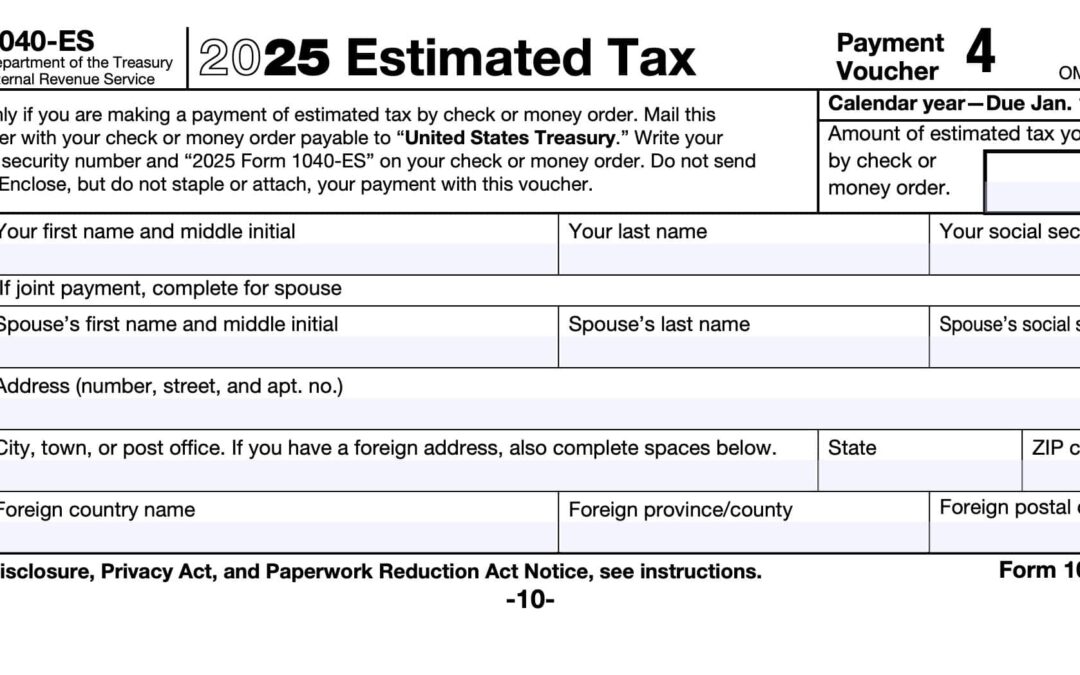
If you’re self-employed, a high earning W-2 employee with little or no withholding, an independent contractor, a gig worker, or someone who regularly owes at tax time, estimated taxes aren’t optional, they’re a requirement. Yet every year, millions of taxpayers skip or fall behind on their quarterly estimated payments.
Most people don’t do this intentionally. Life happens. Income fluctuates. Bills pile up. Or maybe you just didn’t realize you were required to make estimated payments in the first place.
But here’s the truth, failing to file and pay estimated taxes can quietly snowball into crushing tax debt, and put you squarely in the IRS’s enforcement crosshairs.
This is one of the most common reasons people end up needing tax resolution help. Let’s break down the hidden dangers so you know what to watch out for and how to protect yourself moving forward. If after reading this blog you still have questions, contact us at Action Tax Relief by calling 937-268-2737 or visiting www.ActionTaxRelief.com.
1. The Penalties Add Up Faster Than You Think
When you don’t make required estimated tax payments, the IRS charges two major penalties, and they compound:
• Failure to Pay Penalty
This penalty accrues monthly until the balance is paid in full. Many taxpayers are shocked when they discover how large this penalty has grown after just a few missed quarters.
• Underpayment Penalty
Even if you do pay your taxes when you file your return, you may still get hit with an underpayment penalty if you didn’t pay enough throughout the year.
And here’s the kicker, both penalties are stacked on top of the interest the IRS charges daily.
Failure to file estimated taxes is like putting your tax debt on a high interest credit card you never signed up for.
2. Falling Behind Once Makes It Easier to Fall Behind Again
Taxpayers rarely fall behind for just one quarter. Once you start the cycle, it becomes harder to break:
- You owe money for the current year
- You need to start making estimated payments for the next year
- You still have everyday bills and living expenses
- The IRS keeps adding penalties and interest
Very quickly, it becomes impossible to catch up on your own.
Many clients tell us they thought they could “pay it off next year.” But when next year comes, they owe even more, and the overwhelm spirals.
3. Your Income May Trigger IRS Scrutiny
If you’re self-employed or a contractor, the IRS expects estimated taxes.
Failing to pay them can trigger:
- Automated IRS notices
- IRS compliance flags
- A potential audit
- Referral to IRS Collections sooner than expected
This doesn’t mean you did anything wrong, it simply means the IRS views missed estimated payments as a sign you may have unpaid tax liabilities.
4. The IRS Can Introduce Aggressive Collection Actions
Once the IRS processes your return and sees unpaid tax, the collection machine begins moving, whether you’re ready or not. Missed estimated payments often lead to:
- Balance due notices
- Liens on property
- Levies on bank accounts and wages
- Passport restrictions for seriously delinquent tax debt
- Enforced collection if you don’t respond in time
Most taxpayers have no idea how fast this process moves until the IRS is already dipping into their paycheck or freezing their bank account.
5. You May Miss Out on Opportunities to Reduce What You Owe
The IRS offers several programs that may reduce or resolve your tax debt if you qualify, including:
- Penalty abatements
- Installment agreements
- Partial pay installment agreements
- Currently Not Collectible (CNC) hardship status
- Offers in Compromise (settling your tax debt for less than you owe)
But many taxpayers never learn about these options until it’s too late or until they make mistakes responding to the IRS on their own.
6. Doing Nothing Only Makes the Problem Worse
Ignoring estimated taxes doesn’t just create a one-time problem, it becomes a multiyear financial trap. But you don’t have to face it alone.
Thousands of taxpayers regain control every year by hiring a qualified tax resolution professional who deals with the IRS on their behalf, protects their assets, and negotiates the lowest possible resolution allowed by law.
Whether you missed one quarter or several years, you’re not alone, and you’re not beyond help. The worst thing you can do is let fear or embarrassment keep you from getting the relief you need.
You don’t have to keep looking over your shoulder. Contact Action Tax Relief today for a confidential, no obligation consultation by calling 937-268-2737 or visiting www.ActionTaxRelief.com.
Let’s review your situation, explain your options, and create a plan to resolve your tax debt once and for all. Your peace of mind starts with one call.